
What Is Idioms in Writing? A Practical Guide for Clear, Engaging Copy
If you’ve ever read a line of writing that felt warm, witty, or deeply specific without a single long explanation, you’ve likely encountered an idiom. For busy writers, content creators, and anyone who wants to make their copy feel human instead of robotic, understanding what is idioms in writing is a small skill with outsized payoff. Unlike formal jargon, idioms are short, widely recognized phrases that carry a meaning separate from the literal definitions of their individual words, and they work to add personality, cultural context, and relatability to everything from social media captions to customer emails.
Add Warmth and Personality to Flat, Formal Copy

Stiff, overly formal writing can make readers disengage fast, even if the information is useful. Idioms act as quick shortcuts to emotion and shared experience, no extra descriptive fluff required. For example, saying a new project is “a breath of fresh air” instantly signals positivity to readers, no 3-sentence explanation of how novel and welcome the project is needed. Even lesser-known idioms, when used appropriately for your audience, can give your writing a distinct, memorable voice that stands out from generic industry content.
Avoid Miscommunication By Matching Idioms to Your Context

Not all idioms work for every audience or topic. A phrase that feels natural in a casual blog post about side hustles will fall flat in a formal annual report for stakeholders. Take money-related idioms as an example: saying a budget is “tight as a drum” lands well in a personal finance post for new earners, but would feel out of place in a B2B financial update. Using context-appropriate idioms avoids confusing readers or making your writing feel unprofessional for the setting.
Prioritize Clarity Over Showing Off Your Vocabulary
The biggest mistake writers make with idioms is using obscure or niche phrases to sound clever, rather than to communicate clearly. If your audience has to pause to look up an idiom’s meaning, you’ve broken their flow and lost their attention. Stick to idioms that are widely recognized by your target readership first: if you’re writing for U.S. small business owners, phrases like “ballpark figure” or “cutting corners” will land immediately, while a rare regional idiom will leave most readers scratching their heads.
Small Tweaks Make Idioms Feel Natural, Not Forced
Idioms work best when they fit the tone of the rest of your writing, rather than sticking out as a random flourish. Avoid overusing them: one or two per 500 words is more than enough to add personality without making your copy feel cluttered. If you’re unsure whether an idiom fits, read the sentence out loud: if it sounds like something you’d say in a casual conversation with a peer, it’s likely a good fit for most non-formal writing.
At their core, idioms are tools to make your writing feel more like a conversation with a real person, rather than a block of information to scan. When used intentionally, they add warmth, clarity, and memorability to your work without taking up extra space. Start by testing one or two common idioms in your next draft, and pay attention to how readers respond: you’ll likely find they make your writing feel more approachable, and more effective at getting your point across.
If you’ve ever read a line of writing that felt warm, witty, or deeply specific without a single long explanation, you’ve likely encountered an idiom. For busy writers, content creators, and anyone who wants to make their copy feel human instead of robotic, understanding what is idioms in writing is a small skill with outsized payoff. Unlike formal jargon, idioms are short, widely recognized phrases that carry a meaning separate from the literal definitions of their individual words, and they work to add personality, cultural context, and relatability to everything from social media captions to customer emails.
Add Warmth and Personality to Flat, Formal Copy
Stiff, overly formal writing can make readers disengage fast, even if the information is useful. Idioms act as quick shortcuts to emotion and shared experience, no extra descriptive fluff required. For example, saying a new project is “a breath of fresh air” instantly signals positivity to readers, no 3-sentence explanation of how novel and welcome the project is needed. Even lesser-known idioms, when used appropriately for your audience, can give your writing a distinct, memorable voice that stands out from generic industry content.
Avoid Miscommunication By Matching Idioms to Your Context
Not all idioms work for every audience or topic. A phrase that feels natural in a casual blog post about side hustles will fall flat in a formal annual report for stakeholders. Take money-related idioms as an example: saying a budget is “tight as a drum” lands well in a personal finance post for new earners, but would feel out of place in a B2B financial update. Using context-appropriate idioms avoids confusing readers or making your writing feel unprofessional for the setting.
Prioritize Clarity Over Showing Off Your Vocabulary
The biggest mistake writers make with idioms is using obscure or niche phrases to sound clever, rather than to communicate clearly. If your audience has to pause to look up an idiom’s meaning, you’ve broken their flow and lost their attention. Stick to idioms that are widely recognized by your target readership first: if you’re writing for U.S. small business owners, phrases like “ballpark figure” or “cutting corners” will land immediately, while a rare regional idiom will leave most readers scratching their heads.
Small Tweaks Make Idioms Feel Natural, Not Forced
Idioms work best when they fit the tone of the rest of your writing, rather than sticking out as a random flourish. Avoid overusing them: one or two per 500 words is more than enough to add personality without making your copy feel cluttered. If you’re unsure whether an idiom fits, read the sentence out loud: if it sounds like something you’d say in a casual conversation with a peer, it’s likely a good fit for most non-formal writing.
At their core, idioms are tools to make your writing feel more like a conversation with a real person, rather than a block of information to scan. When used intentionally, they add warmth, clarity, and memorability to your work without taking up extra space. Start by testing one or two common idioms in your next draft, and pay attention to how readers respond: you’ll likely find they make your writing feel more approachable, and more effective at getting your point across.
Burn Bridges Idiom Meaning And Sentence - Infoupdate.org
Burn Bridges Idiom Meaning And Sentence - Infoupdate.org
Idioms - ESLBUZZ
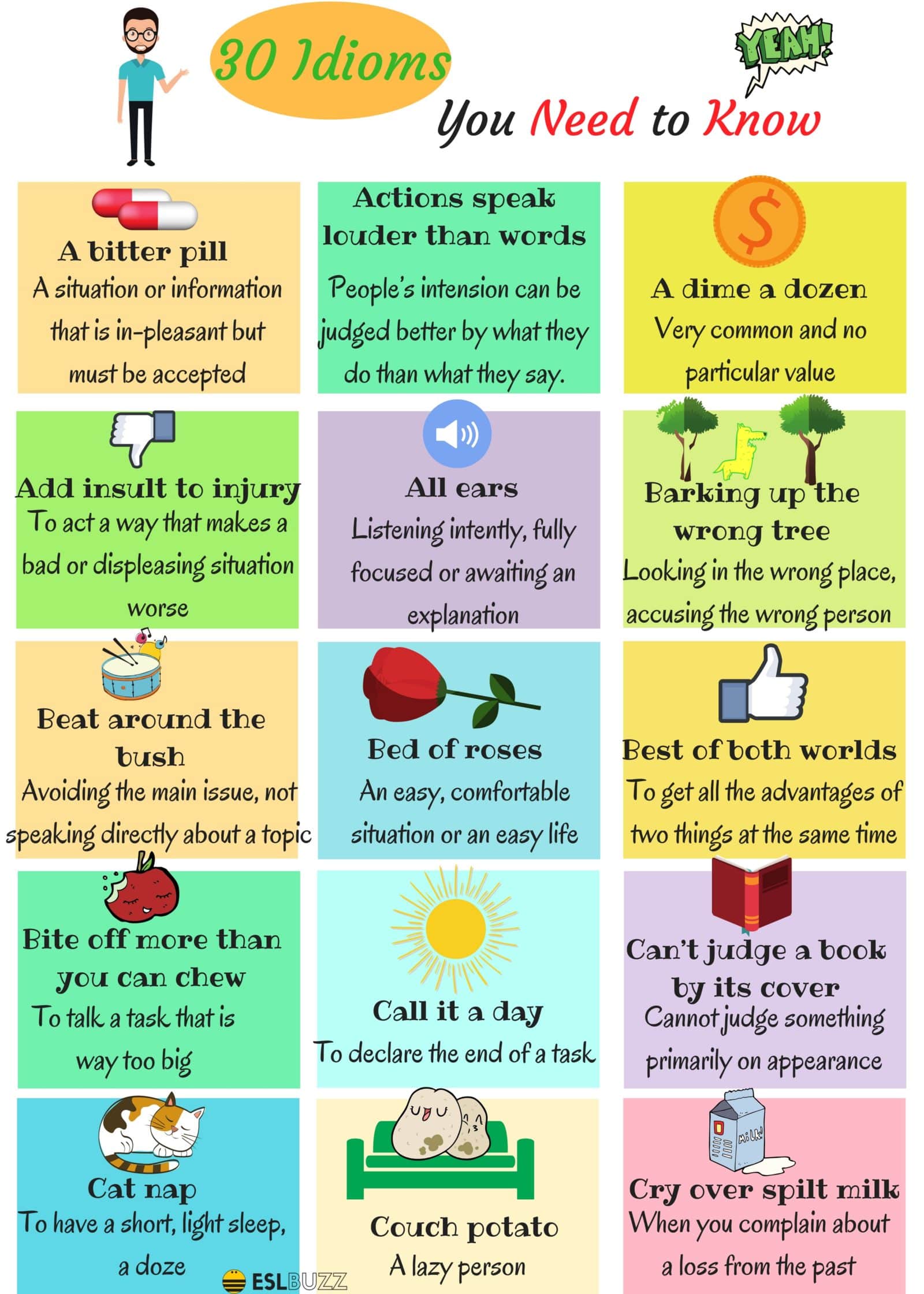
Idioms - ESLBUZZ
Idiom 1500 English Idioms From Az With Examples Vacation Cheat Sheet:
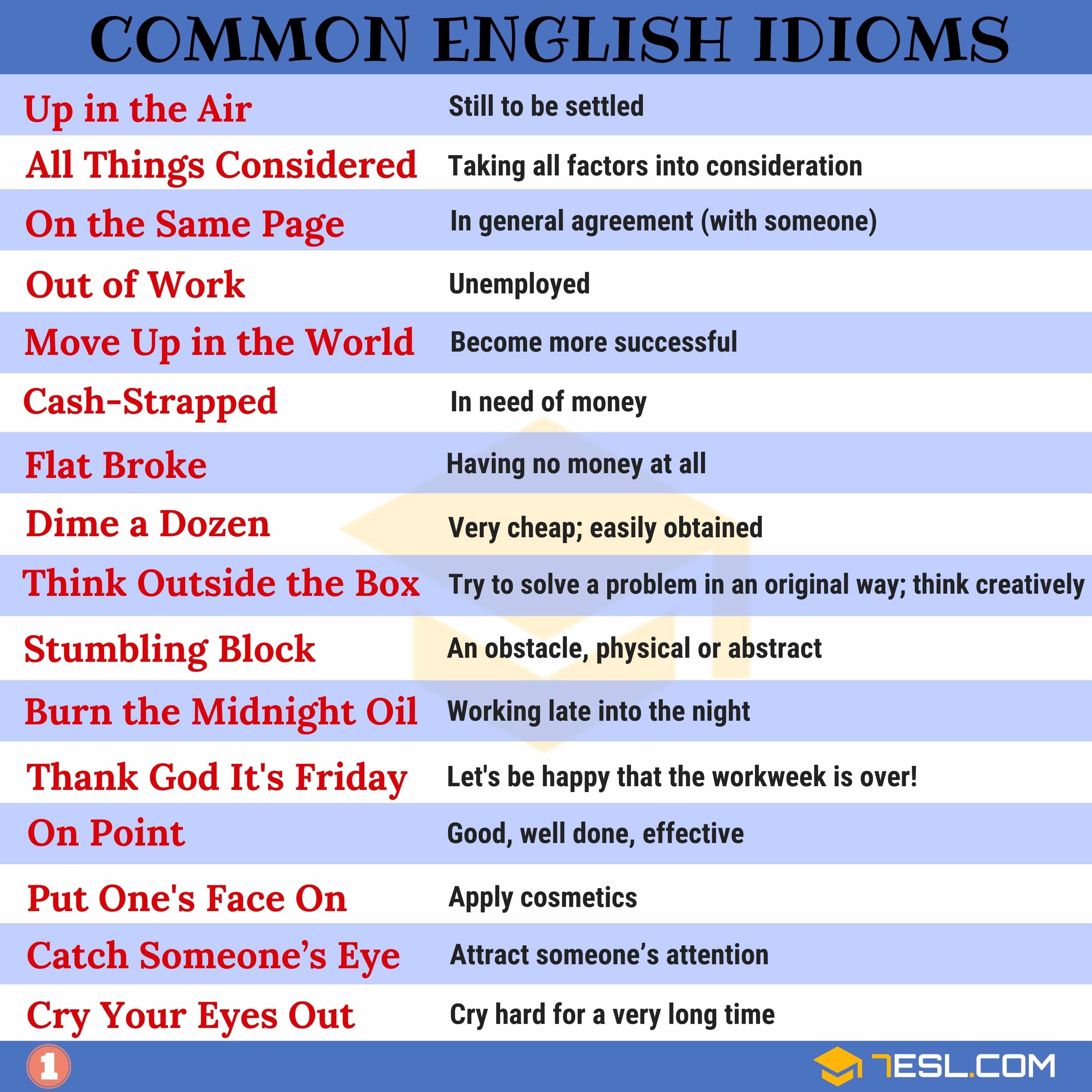
Idiom 1500 English Idioms From Az With Examples Vacation Cheat Sheet: